Introduction
Imagine receiving a call from your boss asking for urgent action or a voice message from your girlfriend or boyfriend sounding emotional and real. You recognize the tone, then take a pause, even your breathing patterns changes. Everything feels authentic.
But here’s the uncomfortable truth: That voice may not belong to them at all.

Welcome to the era of AI voice cloning, where just a few 3 to 10 seconds of audio can be enough to replicate someone’s voice with shocking accuracy. What once required expensive studios and expertise is now available through simple online tools, many of them free. This isn’t science fiction anymore. It is already being used in scams, fraud, and social engineering attacks across the world.
What Is Voice Cloning
Voice cloning is a form of artificial intelligence that learns how a person speaks their tone, pitch, accent, and rhythm and then recreates that voice artificially. All it needs:
- A short audio sample (sometimes just 10–30 seconds)
- An AI model
- A text input
Output: A fake voice that sounds real.
Why This Is Dangerous
Let’s be brutally honest, this is not a niche risk anymore.
Common Misuse Scenarios:
- Fake calls from “boss” asking for urgent payments
- Breakup call from your girlfriend or boyfriend
- Voice notes impersonating family members in distress
- Fraud in banking / OTP manipulation
- Internal corporate manipulation (“approve this quickly”)
The key problem:
Humans trust voices more than text.
How Easy is it to clone a voice of your boss or Girlfriend or Boyfriend?
Today, anyone can:
- Record your voice (from WhatsApp, calls, social media)
- Upload it into a free tool
- Generate fake speech in minutes
- No coding. No technical skills. No cost.
That’s the real risk:
- Tools That Make It Possible (Awareness Only)
Some widely available tools (free & online):
1. Uberduck (Voice Cloning – Web Based)
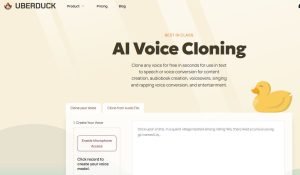
Uberduck is one of the easiest entry points into voice cloning. You can record or upload a voice sample directly in the browser and generate synthetic speech almost instantly. It offers a free tier, which is sufficient for basic testing and proof of concept work. The quality is not top tier, but it’s good enough to simulate low to mid sophistication misuse scenarios, especially voice notes or short messages.
2. VEED.io (AI Voice Cloning + Video Integration)
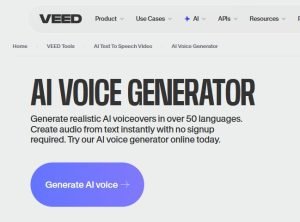
VEED operates as a browser based content platform where voice cloning is embedded into a video editor workflow. You can record your voice once and reuse it for generating speech from text. The free plan is limited but functional. Its biggest advantage is usability, this is exactly the kind of tool a non-technical user can leverage quickly, making it relevant for internal misuse scenarios.
3. PlayHT (Online Voice Cloning)
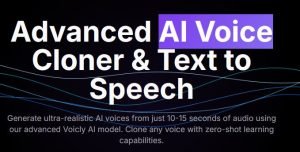
PlayHT provides high-quality voice cloning through a web interface with a free trial tier. It supports multiple languages and offers relatively natural output compared to other browser tools. While advanced usage requires a paid plan, the free tier is enough to evaluate realistic speech synthesis and API-based workflows.
4. ElevenLabs (Web-Based Voice Cloning – Free Tier)

ElevenLabs is the benchmark for realism and is fully accessible via browser. The free tier allows limited usage but is powerful enough to demonstrate near-human quality cloning. This is the closest representation of what high-end misuse would look like in the real world, even without paying.
5. Descript (Overdub – Browser + Cloud)
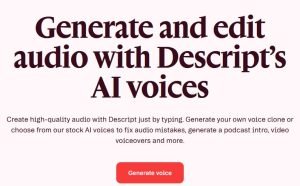
Descript allows you to create a digital version of your voice and then edit audio like a document. Its free tier is limited, and it requires a bit more setup (training audio), but once configured, it becomes a powerful tool for modifying spoken content. Particularly useful for testing edited or manipulated recordings, not just fresh generation.
6. Narakeet (Simple Online TTS + Voice Style)
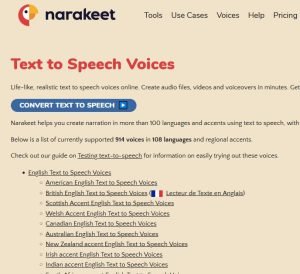
Narakeet is more of a lightweight tool compared to others but requires zero setup. While it’s primarily text-to-speech, it can still be used to simulate synthetic voices quickly. Good for basic spoofing scenarios where high realism is not required.
How to Protect Yourself
Do NOT trust voice alone
- Always verify sensitive requests through:
- Callback on known number
- Message confirmation
- Face to face validation
Create a “Verification Culture”
- In organizations, no financial or sensitive action on voice-only requests
- Introduce code words/secondary confirmation
Be Careful What You Share
- Avoid posting long voice recordings publicly
- Limit exposure on social media
Watch for Red Flags
- Urgency (“do it now”)
- Emotional pressure
- Slight unnatural tone in long sentences
Final Thought
In the past, “seeing is believing” Today, even hearing is no longer enough.
AI has crossed a critical line it can now mimic identity, not just data.
The question is no longer “Is this possible?”
It’s “Are you prepared for it?”







Cyber Security Researcher. Information security specialist, currently working as risk infrastructure specialist & investigator. He is a cyber-security researcher with over 25 years of experience. He has served with the Intelligence Agency as a Senior Intelligence Officer. He has also worked with Google and Citrix in development of cyber security solutions. He has aided the government and many federal agencies in thwarting many cyber crimes. He has been writing for us in his free time since last 5 years.