Your company’s cloud may be wide open right now, and you may not know it. One free tool on GitHub can check your cloud accounts for dangerous mistakes in a few minutes. It is called Prowler. Over 15,000 people have starred it on GitHub, and thousands of security teams use it. The same speed that helps defenders also makes people nervous. Let’s look at both sides.
What Is Prowler, and Why Is Everyone Talking About It?
Prowler is a free, open-source cloud security platform released under the Apache 2.0 license. It checks your cloud setup against security best practices and tells you what is wrong and how to fix it.
It works with many platforms. These include AWS, Azure, Google Cloud, Kubernetes, Microsoft 365, GitHub, Oracle Cloud, Alibaba Cloud, Cloudflare and more. AWS alone has more than 600 ready-made checks.
It also maps your results to well-known standards. Examples are CIS, NIST, PCI-DSS, GDPR, HIPAA, SOC2, ISO 27001 and MITRE ATT&CK. If an auditor asks “Are we compliant?”, Prowler gives you a report.
The Shocking Mistakes It Catches
Most cloud breaches don’t come from movie-style hacking. They come from simple mistakes like these:
- Storage buckets left open to the public
- Accounts with no multi-factor authentication
- Users with far more permissions than they need
- Old access keys that nobody ever rotated
- Logging turned off, so nobody sees an attack happening
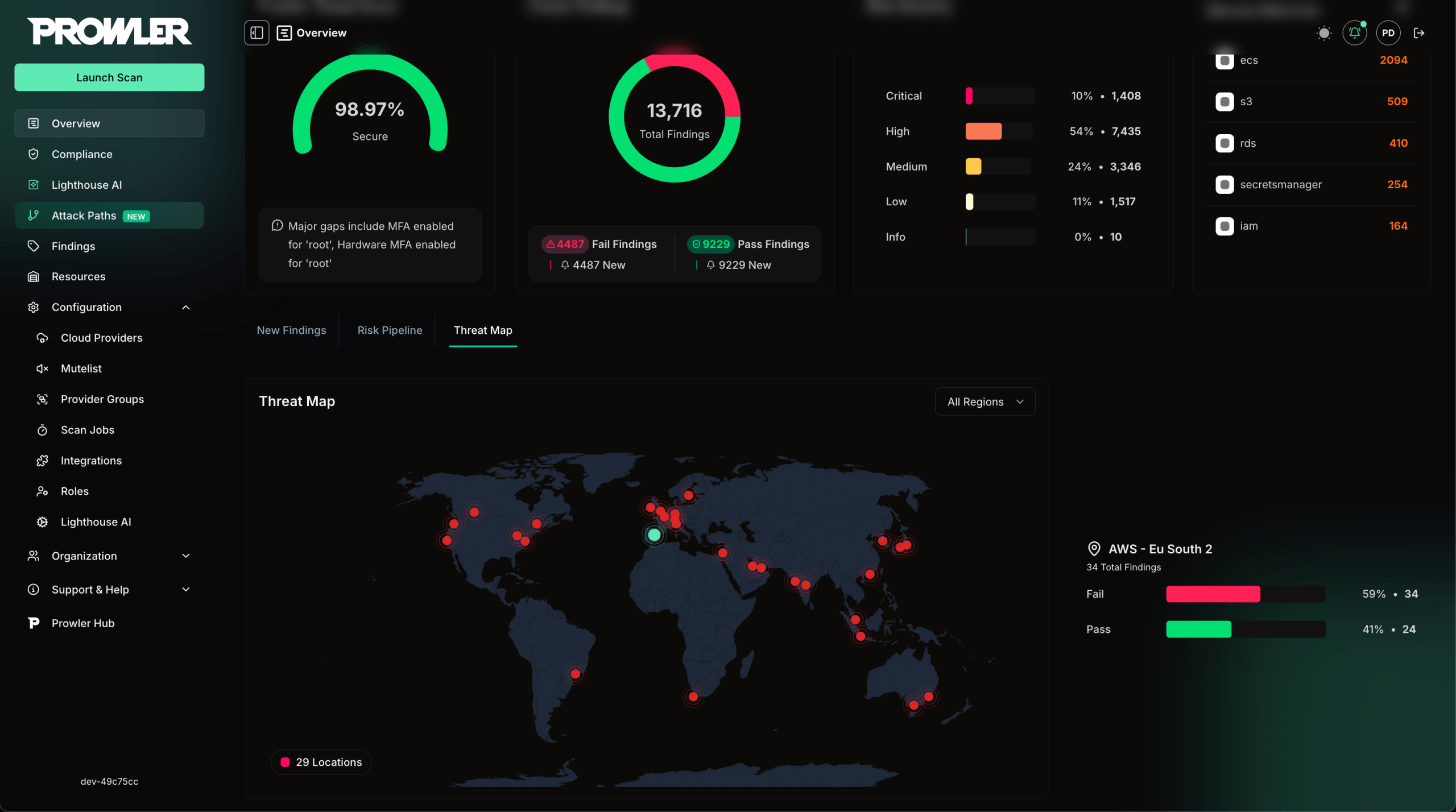
Prowler looks for these and ranks them by risk. It even has a “ThreatScore” so you fix the scariest problems first.
How to Install Prowler (Step by Step)
You have three easy options.
Option 1: Pip (the quickest)
You need Python 3.10 to 3.12. Then run:
pip install prowler
prowler -v
Option 2: Docker Compose (gets you the web app)
VERSION=$(curl -s https://api.github.com/repos/prowler-cloud/prowler/releases/latest | jq -r .tag_name)
curl -sLO "https://raw.githubusercontent.com/prowler-cloud/prowler/refs/tags/${VERSION}/docker-compose.yml"
curl -sLO "https://raw.githubusercontent.com/prowler-cloud/prowler/refs/tags/${VERSION}/.env"
docker compose up -d
Then open http://localhost:3000 and sign up.
Option 3: From source
git clone https://github.com/prowler-cloud/prowler
cd prowler
uv sync
source .venv/bin/activate
python prowler-cli.py -v
Windows users should first run git config core.longpaths true.
How to Use It
Using it is very simple. The basic command is:
prowler <provider>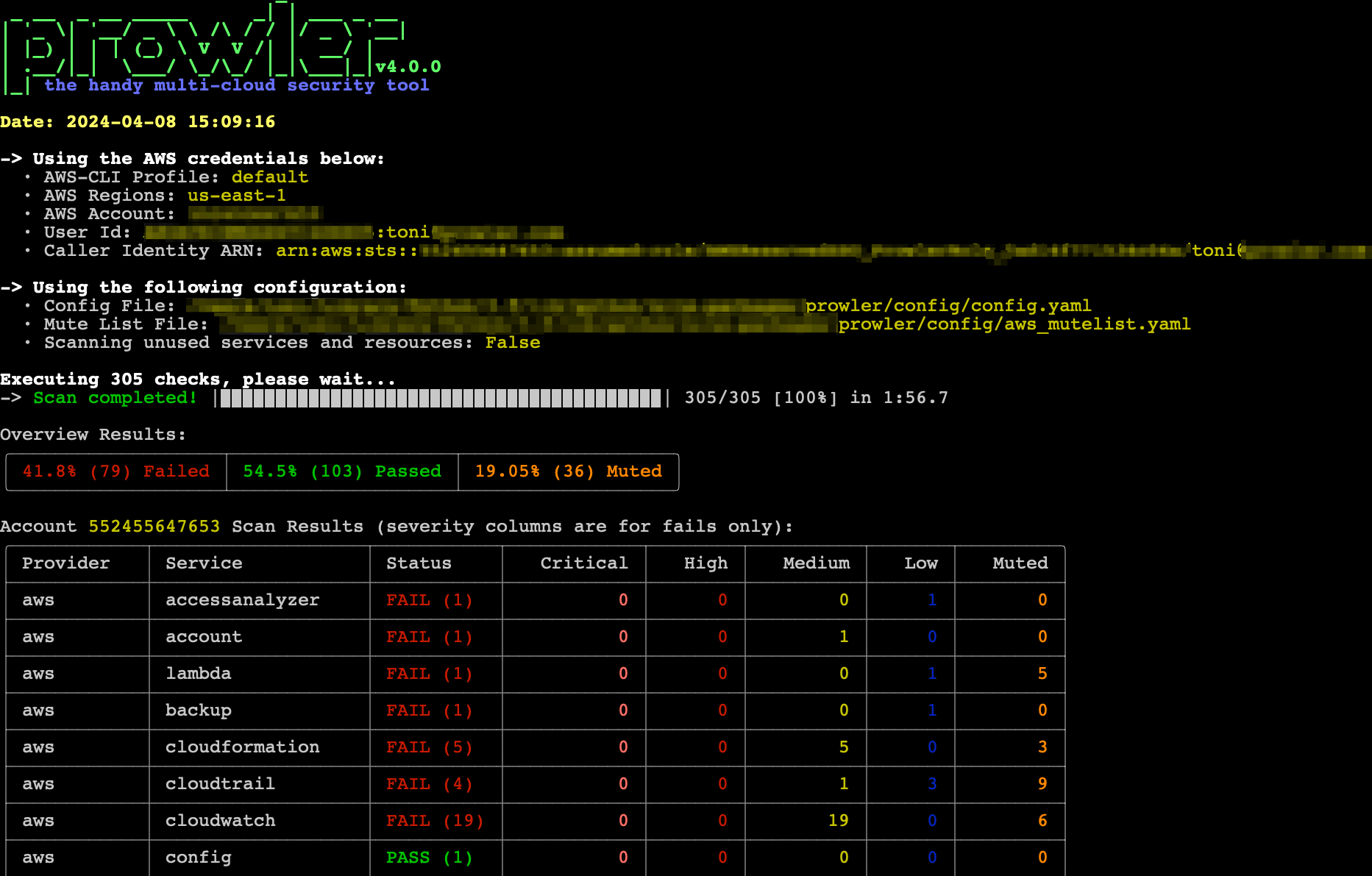
For example, prowler aws scans your AWS account using your configured credentials. A few other useful commands:
prowler dashboardopens a local dashboard to explore the resultsprowler aws --list-checksshows every check availableprowler aws --list-complianceshows the supported frameworks
You can also add it to your pipeline. Prowler has an official GitHub Action that scans your code on every pull request and shows findings in the Security tab.
The Docker Compose setup gives you a full web interface with charts, risk views and an “Attack Paths” graph. That graph shows how a small weakness could be chained into a bigger one.
Can Hackers Misuse Prowler? Be Aware!
Prowler is built for defenders. But any tool that finds weaknesses can interest an attacker, and it is better to know how.
1. Faster reconnaissance with stolen keys. If an attacker steals cloud credentials, a scanner can show them quickly what the account contains and what is misconfigured. That saves them time. Prowler’s checks are public, so attackers know what it looks for.
2. Showing attackers where to go. Features like Attack Paths exist so defenders can see risky chains. In the wrong hands, the same kind of map could help an intruder choose a target.
3. Leaked reports. Scan reports list your weak spots. If a report sits in an open bucket, an email or a public repo, it hands attackers a to-do list.
4. Fake downloads. Popular tools attract fake copies. A cloned version with hidden malicious code can steal your credentials when you run it.
Note that Prowler only reads and audits your settings. It does not break into systems. Still, running it needs credentials, and credentials are what attackers want.
How to Stay Safe
- Use read-only access. Give Prowler a least-privilege audit role, never admin keys.
- Protect your reports. Store them in a private, encrypted place and delete old ones.
- Download only from official sources. Use the GitHub repo, PyPI, or the official Docker images.
- Don’t keep default settings. The Docker setup warns against default values in production. Change the
.envfile. - Never commit keys. Use short-lived credentials and role assumption.
- Turn on MFA and logging in all your cloud accounts.
- Scan only what you own. Running audits on accounts you don’t have permission for can be illegal.
Final Thoughts
Prowler is a strong tool for finding weak spots before someone else does. It is free and easy to install. The risk comes from how you handle credentials and reports, not from the tool. Run it on your own accounts, keep its output private, and fix what it finds.






Cyber Security Researcher. Information security specialist, currently working as risk infrastructure specialist & investigator. He is a cyber-security researcher with over 25 years of experience. He has served with the Intelligence Agency as a Senior Intelligence Officer. He has also worked with Google and Citrix in development of cyber security solutions. He has aided the government and many federal agencies in thwarting many cyber crimes. He has been writing for us in his free time since last 5 years.