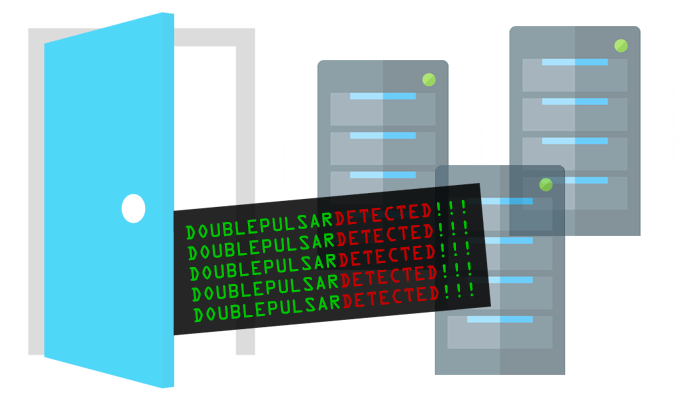

NSA’S DOUBLEPULSAR KERNEL EXPLOIT IN USE INTERNET-WIDE
If you’re on a red team or have been on the receiving end of a pen-test report from one, then you’ve almost certainly encountered reports of Windows servers vulnerable toRead More →
Internet-connected devices in your home or office will be vulnerable to botnets and other attacks, if you don’t change the original login credentials. The number of internet-connected devices has risenRead More →
Security researchers from Neseso are sounding the alarm on a vulnerability they’ve discovered in Samsung smart TVs that Samsung declined to fix. The security flaw affects Wi-Fi Direct, a Wi-FiRead More →
Group chat service HipChat made an announcement on its blog that their Security Intelligence Team detected a “vulnerability” in a third-party library used by the app. In simpler terms, someRead More →
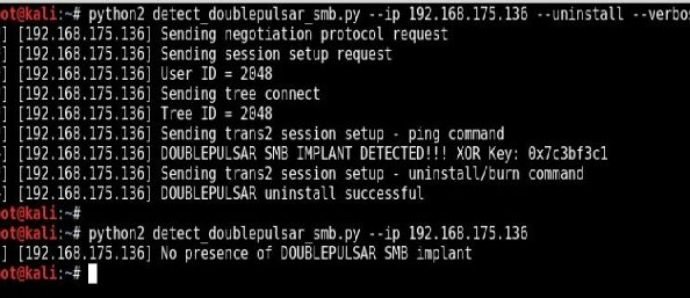
Microsoft dismisses DoublePulsar infection estimates, but otherwise remains silent. After Microsoft officials dismissed evidence that more than 10,000 Windows machines on the Internet were infected by a highly advanced National SecurityRead More →
Windows’ system files were flagged as malicious, and Facebook was marked as a phishing site. A malware signature update issued by the company on Monday triggered the software into mistakenlyRead More →
A vulnerability in the Microsoft Edge browser can be exploited and allow an attacker to obtain a user’s password and cookie files for various online accounts. The vulnerability came toRead More →
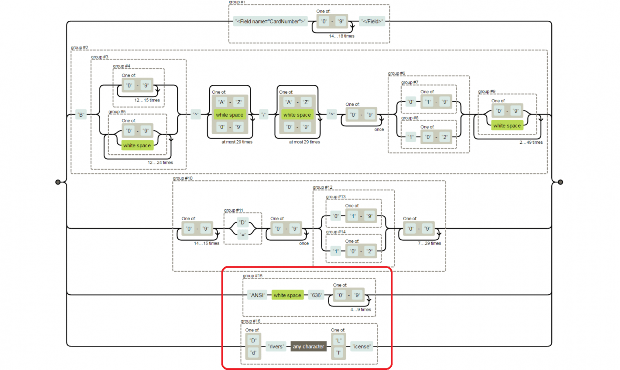
Malware specialized in infecting Point of Sale (PoS) software has gained the ability to search and steal driver’s license information, according to a report published by US cyber-security firm TrendRead More →
SophosLabs has discovered a new spam campaign where ransomware is downloaded and run by a macro hidden inside a Word document that is in turn nested within a PDF, like a Russian matryoshkaRead More →
Interpol investigators announced today they’d identified over 8,800 servers hosted across eight countries in Southeast Asia used for various cybercrime operations. According to Interpol, these are command-and-control (C&C) servers usedRead More →
One of the vulnerabilities used to spread the Stuxnet virus was 2016’s most popular exploit, according to telemetry data gathered by Russia cyber-security firm Kaspersky Labs. Identified as CVE-2010-2568, thisRead More →
A group of Israeli researchers has devised a new technique to exfiltrate data from a PC in an air-gapped network through malware controlled via scanners. The team was composed of Ben Nassi, a graduateRead More →
Millions of users looking to get software updates have downloaded an app hiding a spyware called SMSVova through the official Google Play store. Bad news for millions of Android usersRead More →
On Friday, April 7, the FBI arrested Zhengquan Zhang, a 31-year-old IT engineer, who now stands accused of installing malware on his employer’s servers to steal proprietary source. Zhang startedRead More →
One week ago today, the Shadow Brokers (an unknown hacking entity) leaked the Equation Group’s (NSA) FuzzBunch software, an exploitation framework similar to Metasploit. In the framework were several unauthenticated,Read More →
Roman Seleznev, the son of the prominent Russian Parliament member Valery Seleznev was sentenced to 27 years in jail for hacking. The Russian hacker Roman Seleznev, aka Track2, was sentenced to 27Read More →
Microsoft recently fixed a vulnerability in its video chat and messaging app Skype that could have allowed an attacker to execute code on the system it was running on, phishRead More →
After almost an almost non-existent presence in 2017 and a few weeks off, Locky is back with a fresh wave of SPAM emails containing malicious docs. While it is not knownRead More →
Did script kiddies use DoublePulsar code released by NSA-leaking Shadow Brokers? Security experts believe that tens of thousands of Windows computers may have been infected by a highly advanced NationalRead More →
A new form of Android malware, named Milkydoor, uses remote port forwarding via Secure Shell (SSH) tunnels to hide malicious traffic and grant attackers access to firewall-protected networks. The malwareRead More →